 By Benjamin Lewis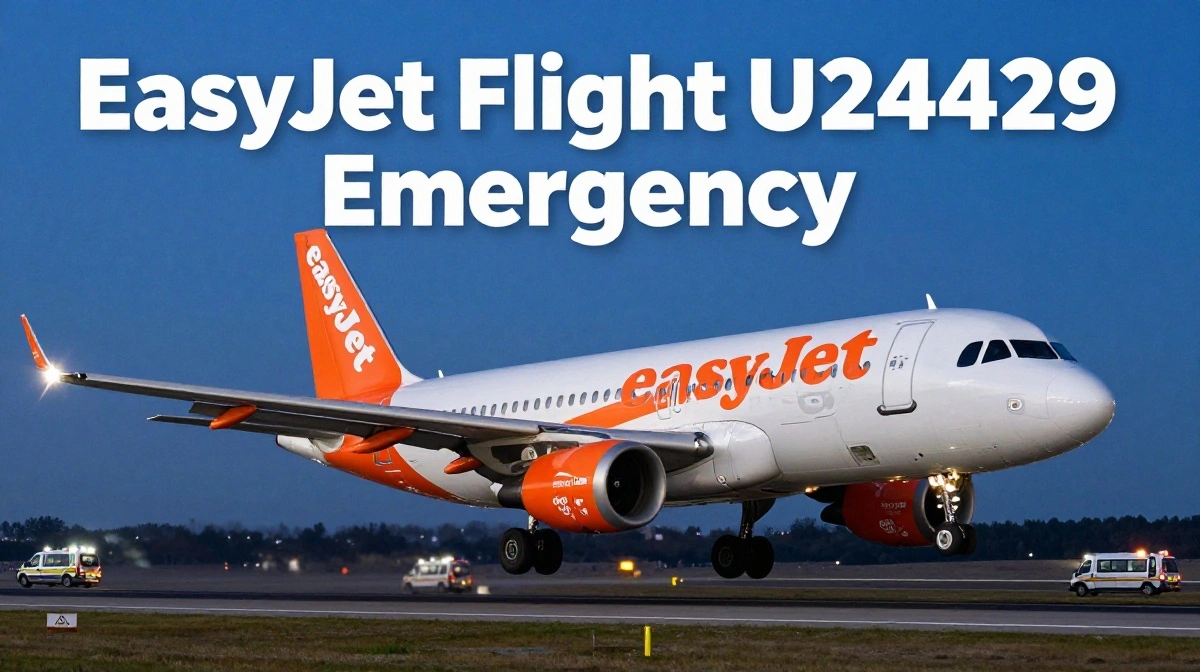
On 22 August 2025, the easyJet flight U24429 emergency shook passengers and aviation watchers across the United Kingdom and Europe. What started as a routine short-haul service from Lyon Saint-Exupéry Airport to Porto Francisco Sá Carneiro Airport became a dramatic mid-air turnaround within minutes of takeoff. The crew declared an emergency, activated squawk code 7700, and returned to Lyon where police were waiting on the ground. For anyone who follows aviation news or was personally affected by the disruption, understanding exactly what happened — and why every decision made that day was the right one — matters enormously. This article breaks it all down clearly and thoroughly.
What the EasyJet Flight U24429 Emergency Actually Involved
The easyJet flight U24429 emergency was not caused by a mechanical fault or technical failure in the aircraft. The Airbus A320 operating the Lyon-to-Porto route was functioning normally. Instead, the emergency was triggered by a serious passenger behaviour incident that developed rapidly after departure.
A disruptive individual on board created a situation that the cabin crew determined was too dangerous to manage mid-flight without immediate support from ground authorities. This distinction is critical. Many people hear “aviation emergency” and assume the aircraft itself is in danger.
In this case, the danger was human, unpredictable, and required a fast, structured response. Aviation protocols cover exactly these situations, and the crew followed them precisely. The aircraft climbed to approximately 20,000 feet before the decision was made to return, showing how quickly the crew assessed the risk and acted.
The Route, the Aircraft, and the Passengers Involved
Flight U24429, also referenced in tracking systems as EJU4429, was a standard easyJet short-haul service connecting two major European airports. Lyon Saint-Exupéry is one of France’s busiest regional airports, and Porto Francisco Sá Carneiro handles millions of passengers annually.
The Airbus A320 used on this route is one of the most reliable and widely flown aircraft in the world, operated by hundreds of airlines across Europe. On this particular evening, the aircraft carried a full complement of passengers expecting nothing more than a short, uneventful crossing to Portugal.
The disruption that emerged shortly after takeoff was unexpected and alarming. Passengers would have noticed the aircraft changing course, the tension among cabin crew, and eventually the announcement that the flight was returning to Lyon — all deeply unsettling experiences for anyone on board.
How the Crew Responded in the First Critical Minutes
When a disruptive passenger situation escalates on board, the cabin crew’s training kicks in immediately. On easyJet flight U24429, the crew took swift and coordinated action. Cabin staff communicated directly with the flight deck, relaying information about the severity of the incident.
The pilots assessed the situation, confirmed the risk, and made the call to turn back toward Lyon. Air traffic control was notified through the squawk 7700 emergency code, giving the aircraft immediate priority in French airspace. Ground teams at Lyon were alerted and authorities positioned themselves ready to respond on landing.
This entire chain of actions happened within a tight window of time, demonstrating just how rehearsed and effective modern airline emergency procedures genuinely are when properly executed by trained professionals.
What Squawk 7700 Tells Air Traffic Control
Squawk 7700 is the universal general emergency code used by pilots worldwide. When a pilot selects this transponder code, it immediately signals to air traffic control that the aircraft requires urgent priority handling.
Controllers will clear surrounding airspace, give the aircraft direct routing to its destination or diversion airport, and alert emergency services on the ground. It does not mean a crash is happening or imminent. It means that something serious is occurring and the crew needs maximum support from the wider aviation system right now.
For the easyJet flight U24429 emergency, activating squawk 7700 was the correct and immediate action. It ensured Lyon’s emergency teams had full situational awareness and were ready long before the aircraft touched down, making the safe resolution of this incident far more likely.
Why Returning to Lyon Was the Smartest Decision
Returning to Lyon rather than continuing toward Porto was a textbook safety decision. The aircraft had been airborne for only a short time, meaning Lyon was still the closest fully equipped airport available. Lyon Saint-Exupéry has 24-hour police presence, medical teams, and full emergency infrastructure.
Continuing to Porto would have meant managing an active, volatile passenger situation for another hour and a half over two countries, without immediate access to authorities who could physically remove the individual.
Pilots are trained to weigh distance, aircraft condition, ground support availability, and the nature of the threat before choosing where to land. Every factor pointed back to Lyon. Choosing to return was not a defeat — it was the fastest and safest way to resolve the situation and protect everyone else on board.
The Role of Police and Airport Authorities After Landing
When easyJet flight U24429 touched down safely at Lyon, French police were already positioned and waiting. The aircraft was guided to a stand where authorities could board quickly and remove the disruptive passenger without prolonged confrontation inside the cabin.
This handover from cabin crew to ground authorities is a well-rehearsed part of the aviation security process. Cabin crew are not law enforcement officers. Their role ends when the aircraft is safely on the ground and authorities take control. The speed and organisation of the police response at Lyon played a significant part in resolving the situation efficiently.
Once the passenger was removed and the aircraft was assessed as safe and ready, easyJet coordinated the continuation of the flight to Porto, getting the remaining passengers to their destination with as little additional delay as possible.
How Passengers Experience an Emergency Return
For the passengers on board easyJet flight U24429, the experience would have been deeply unsettling. An emergency return mid-flight involves visible tension among crew, sudden changes in direction, and an announcement that rarely contains full details while the aircraft is still in the air.
Most passengers will not know precisely what is happening until after landing. Cabin crew are trained to keep passengers calm, provide essential information, and prevent panic from spreading through the cabin. Some passengers may have witnessed part of the disruptive incident directly.
Others would have only sensed the urgency through the behaviour of those around them and the crew’s visible alertness. After landing, passengers face delay, rebooking challenges, and the emotional aftermath of a frightening experience. EasyJet’s responsibility to communicate clearly and support affected travellers does not end when the aircraft stops moving.
What This Incident Reveals About Aviation Safety in the UK and Europe
The easyJet flight U24429 emergency reflects a broader reality in modern aviation: safety is not purely mechanical. Airlines, regulators, and airports across the United Kingdom and Europe invest heavily in training crew to handle human threats with the same seriousness applied to technical ones.
The Civil Aviation Authority in the UK and the European Union Aviation Safety Agency both mandate detailed training standards for cabin crew that cover passenger conflict, cockpit security, medical emergencies, and coordinated emergency communication. This incident demonstrates those standards working in practice.
A disruptive passenger was identified, assessed, and managed without harm to other passengers or crew. The aircraft returned safely, authorities intervened appropriately, and the journey eventually continued. Every part of that chain depended on training, communication, and trust between crew members, pilots, controllers, and ground teams.
Conclusion: What the EasyJet Flight U24429 Emergency Teaches Every Traveller
The easyJet flight U24429 emergency is a powerful reminder that aviation safety extends well beyond engine checks and weather briefings. It encompasses the human environment inside every aircraft — the passengers, the crew, and the unpredictable situations that can emerge at 20,000 feet.
The crew of this Lyon-to-Porto flight made fast, well-reasoned decisions under pressure. Air traffic control responded precisely. Lyon’s airport authorities acted without hesitation. And ultimately, every passenger reached safety.
For anyone who flies regularly, this story carries a reassuring message: the systems built around commercial aviation are thorough, tested, and designed to handle the unexpected. Whether you’re a frequent flyer or someone nervous about air travel, knowing that emergencies like this are managed this effectively should give you genuine confidence every time you board a flight.